 listicle
Best Alaskan Cruises for Families: 2026 Guide
Table of Contents
- How to Choose the Best Alaskan Cruise for Your Family
- Top Alaskan Cruise Lines for Families
- Alaska Cruise with a Baby: What You Need to Know
- 7-Day Alaskan Cruise Cost for a Family: Budgeting Guide
- Itinerary Highlights: Glacier Viewing and Port Stops
- Alaska Cruise Packing List for Families
- Planning Your Family Alaskan Cruise: Next Steps
- Frequently Asked Questions
Last Updated: October 21, 2026
How to Choose the Best Alaskan Cruise for Your Family
Planning Alaskan cruises for families means balancing ship size, onboard programming, glacier access, and total cost. The best Alaskan cruise for families depends on your children's ages, budget, and priorities.
At Gangway Vacations, we match families with the right cruise line and itinerary daily. The core decision: large ship with extensive kids' clubs, or smaller expedition vessel with closer glacier access?
Large-Ship vs. Small-Ship Experiences
Large ships carry 2,000-4,000 passengers and offer dedicated kids' clubs, multiple dining venues, Broadway-style shows, and extensive activities, departing from Seattle or Vancouver.
Small-ship cruises carry 50-300 passengers and navigate narrow passages closer to glaciers, wildlife, and remote ports, with naturalists narrating sightings.
Most families with children under 8 prefer large ships for supervised childcare and age-appropriate activities; teenagers and adventure-seekers often prefer small ships.
Age-Appropriate Programming and Kids' Clubs
Large cruise lines run supervised kids' clubs by age group.
Small-ship operators rarely offer formal kids' clubs, emphasizing family participation in naturalist talks, bridge wildlife viewing, and hands-on learning. This suits older kids but requires more parental involvement.
When evaluating kids' clubs, ask: Are they included in the fare or extra? What are the age cutoffs? Can your child attend multiple hours daily?
Top Alaskan Cruise Lines for Families
1. Gangway Vacations, Your Family Cruise Planning Partner
We're not a cruise line, we're your dedicated travel advisor. We match your family with the right Alaskan cruise by handling logistics: comparing itineraries, finding the best cabin, coordinating flights and hotels, and arranging age-appropriate shore excursions. We work with all major lines with no bias.
We know the best kids' clubs, the itineraries with the most glacier time, and how to budget realistically.
2. Royal Caribbean, Large-Ship Family Fun
Royal Caribbean sails three Alaska ships: Ovation of the Seas, Radiance of the Seas, and Vision of the Seas.
Royal Caribbean's Alaska itineraries include Glacier Bay and Inside Passage ports like Juneau, Ketchikan, and Sitka. Seven-day cruises depart from Seattle or Vancouver, with glacier viewing from the deck rather than up close.
Best for: Families with children ages 4-12 who want structured entertainment, multiple dining options, and a lively onboard atmosphere.
Pros:
- Adventure Ocean kids' clubs included in cruise fare
- Multiple pools, water slides, and activity venues
- Variety of dining (main dining room, buffet, specialty restaurants)
Cons:
- Large crowds during peak summer season
- Distant glacier viewing compared to small ships
- Additional costs for specialty dining, shore excursions, and onboard activities
3. Princess Cruises, Glacier Bay Exploration
Princess operates five Alaska ships: Ruby, Sapphire, Royal, Island, and Emerald. These mid-sized ships carry 1,900-3,600 passengers and emphasize scenic cruising and educational programming, offering the most time in Glacier Bay National Park.
Princess's Youth Program serves ages 3-17 with trivia, arts and crafts, and Alaska educational talks, included in your fare.
Best for: Families prioritizing glacier viewing and scenic beauty, especially those interested in exploring interior Alaska beyond the coast.
Pros:
- Most time in Glacier Bay compared to other major lines
- Cruisetour options combine cruise with land-based exploration
- Educational programming about Alaska's glaciers and wildlife
Cons:
- Fewer onboard activities and entertainment compared to Royal Caribbean
- Smaller kids' clubs with less programming variety
- Cruisetours add significant cost and complexity
4. Disney Cruise Line, All-Inclusive Family Experience
Disney Cruise Line operates one Alaska ship: Disney Wonder, a mid-sized ship carrying 1,750 passengers. Kids' clubs, character meet-and-greets, Broadway-quality shows, and themed dining are all included.
Disney's Alaska itineraries include Glacier Bay, Inside Passage ports, and typically Juneau, with seven-day cruises from Seattle. Meals, kids' clubs, most entertainment, and basic beverages are included; you pay extra only for specialty dining, shore excursions, and spa services.
Best for: Disney-loving families and those seeking an all-inclusive experience with predictable costs.
Pros:
- All-inclusive pricing (meals, kids' clubs, entertainment included)
- Character experiences and Disney-themed activities throughout the ship
- Excellent kids' clubs with age-appropriate programming
Cons:
- Premium pricing compared to other cruise lines
- Heavy Disney theming may not appeal to all families
- Smaller onboard variety compared to larger Royal Caribbean or Princess ships
5. Holland America Line, Cruisetour Options
Holland America operates three Alaska ships: Volendam, Westerdam, and Zaandam. These mid-sized ships (1,400-2,100 passengers) emphasize scenic cruising and educational programming.
Club HAL serves ages 3-17 with activities, educational talks, and supervised time, included in your fare. Alaska itineraries feature Glacier Bay, Inside Passage, and ports like Ketchikan and Juneau.
Best for: Families interested in combining cruise with land-based exploration or seeking a more relaxed onboard pace.
Pros:
- Cruisetour options (cruise + land package) available
- Educational focus with naturalist programming
- Kids' clubs included in cruise fare
Cons:
- Fewer onboard activities and entertainment compared to larger ships
- Cruisetours are more complex logistically and costly
- Smaller kids' clubs with less programming variety
6. Small-Ship Operators, Adventure-Focused Families
Small-ship operators like AdventureSmith Explorations offer Alaska cruises on vessels carrying 50-300 passengers. These expeditions navigate narrow passages, access remote locations, and provide close glacier and wildlife viewing with naturalists narrating sightings.
Small ships lack formal kids' clubs; families participate together in naturalist talks, bridge wildlife viewing, and hands-on exploration.
Best for: Families with older children seeking adventure, wildlife viewing, and educational experiences over entertainment.
Pros:
- Close glacier and wildlife viewing
- Naturalist-led educational programming
- Access to remote locations and narrow passages
Cons:
- No formal kids' clubs or supervised childcare
- Limited onboard entertainment and activities
- Fewer dining options and less food variety
| Cruise Line | Ship Size | Kids' Clubs | Glacier Access | Best For |
|---|---|---|---|---|
| Royal Caribbean | Large (2,100-4,000) | Extensive, included | Distant viewing | Families with young kids seeking entertainment |
| Princess Cruises | Mid (1,900-3,600) | Moderate, included | Most time in Glacier Bay | Families prioritizing scenic beauty |
| Disney Cruise Line | Mid (1,750) | Excellent, included | Good viewing | Disney-loving families, all-inclusive preference |
| Holland America | Mid (1,400-2,100) | Moderate, included | Good viewing | Families interested in land exploration |
| Small-ship operators | Small (50-300) | None | Closest viewing | Adventure-focused families with older kids |
Alaska Cruise with a Baby: What You Need to Know
Age Requirements and Restrictions
Most cruise lines require infants to be at least 6 months old to sail, though Royal Caribbean and Princess allow babies as young as a few weeks on some itineraries, varying by sailing.
Babies under 12 months typically can't attend kids' clubs, so arrange childcare or keep your baby with you. Some lines offer in-cabin babysitting for a fee; verify when booking.
Most cruise lines provide Pack 'n Plays or portable cribs upon request at no extra charge. Request your crib when booking, not when you board.
Family Cabin Configurations and Sleeping Arrangements
Inside cabins are most affordable, oceanview cabins have a window, balcony cabins offer private outdoor space, and suites provide more room and amenities.
For babies and toddlers, consider a cabin with two beds or a sofa bed so your baby has a separate safe sleeping space.
Cabin size matters with young children; a cramped inside cabin feels claustrophobic with a baby, stroller, and luggage.
7-Day Alaskan Cruise Cost for a Family: Budgeting Guide
Cruise Fare, Cabin Types, and Occupancy
Cruise fares vary by season, ship size, cabin type, and booking timing.
An inside cabin costs less than an oceanview, which costs less than a balcony, but an inside cabin feels cramped with young children.
Fares are quoted per person based on double occupancy.
When comparing fares, clarify what's included: some lines include meals and basic beverages, others charge extra for specialty dining.
Shore Excursions and Additional Expenses
Shore excursions are optional port activities: glacier tours, wildlife viewing, fishing, kayaking, or cultural experiences. They cost extra: a guided glacier hike runs $150-300 per person, whale watching $100-200, and a full-day Denali excursion $300-500.
A family of four booking 2-3 excursions per cruise can add $800-2,000. Gangway Vacations helps select excursions matching your interests and budget.
Additional expenses include specialty dining, spa services, onboard activities, beverages, and tips.
Itinerary Highlights: Glacier Viewing and Port Stops
Glacier Bay and Inside Passage Routes
Most Alaskan cruises follow one of two routes: Glacier Bay or Inside Passage.
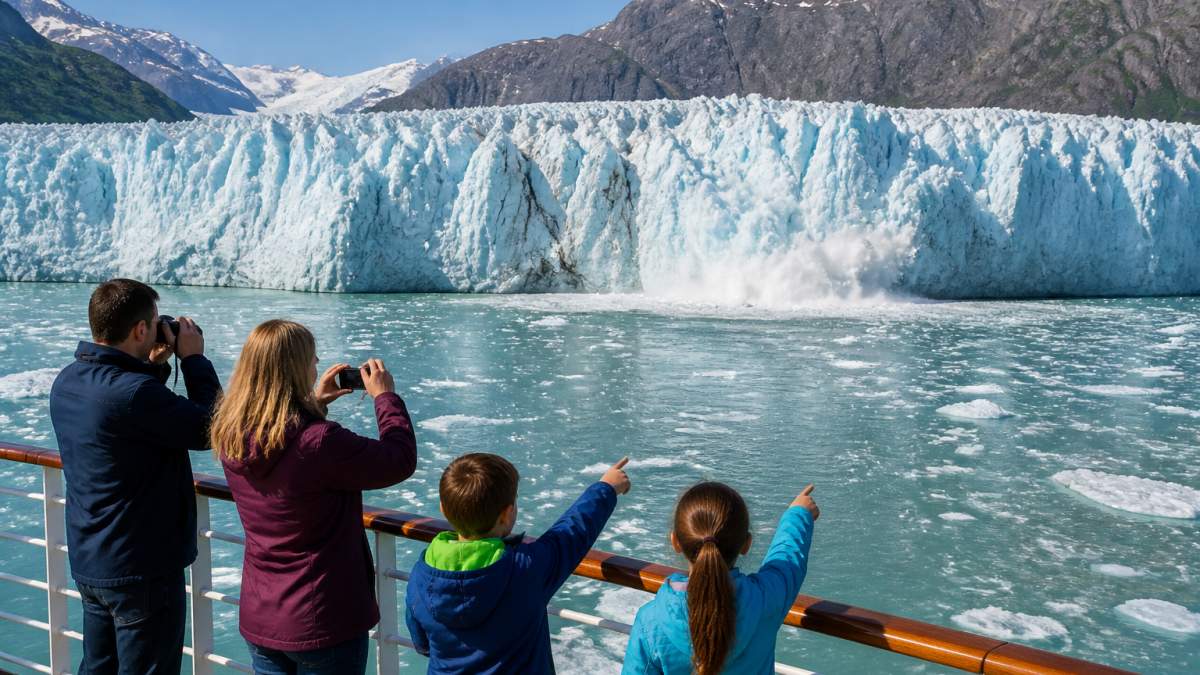
Inside Passage routes visit ports like Juneau, Ketchikan, and Sitka with glacier viewing during scenic cruising, offering more port time but less dedicated glacier viewing than Glacier Bay routes.
Some itineraries combine both, spending time in Glacier Bay plus Inside Passage ports. These run 10-14 days and cost more but offer the most comprehensive Alaska experience.
Family-Friendly Shore Excursions
Family excursions vary by port and age. In Juneau, a Mendenhall Glacier hike or floatplane tour provides close glacier access.
For children under 8, prioritize excursions without extensive hiking: a scenic drive with photo stops, a wildlife viewing boat tour, or a cultural museum visit beats a challenging backcountry hike.
For children 10+, adventure excursions like kayaking, hiking, or wildlife photography tours provide memorable experiences. Small-ship cruises often include naturalist-led excursions with expert guidance built in.
Alaska Cruise Packing List for Families
Weather-Appropriate Clothing and Layers
Alaska's weather is unpredictable, with summer temperatures of 50-65°F and frequent rain. Pack layers for each family member: lightweight long-sleeve shirts, fleece jackets, a waterproof rain jacket, warm socks, and closed-toe shoes.
Children need the same layering. Pack extra socks, shirts, and pants for toddlers who get wet.
Bring sunscreen and sunglasses. Alaska's summer sun is intense, glacier reflection increases UV exposure, and sunburn happens quickly even on cloudy days.
Essentials for Babies, Toddlers, and Older Kids
For babies: diapers, formula, baby food, medications, and comfort items like pacifiers and blankets.
For toddlers: pull-ups or diapers, extra clothes, comfort items, and medications.
For all children: motion sickness medication if prone to seasickness, prescriptions, and basic first-aid supplies (bandages, pain reliever, fever reducer).
Bring a small day bag for each child on shore excursions with water bottles, snacks, and a light jacket.
Planning Your Family Alaskan Cruise: Next Steps
The best Alaskan cruises for families depend on your children's ages, budget, and priorities.
Start planning 9-12 months ahead to secure better cabin selection and pricing. Verify what's included versus extra, and budget for shore excursions, tips, and incidentals beyond the base fare.
Gangway Vacations specializes in matching families with the right Alaskan cruise. Our licensed advisors compare itineraries, find suitable cabins, coordinate flights and hotels, and arrange shore excursions at no cost to you.
Ready to plan your family's Alaskan adventure? Contact Gangway Vacations today. We work with all major cruise operators and have no booking fees, our goal is your stress-free vacation. Plan My Trip with Gangway Vacations and let our licensed travel advisors handle the details.
According to U.S. A Cruise Industry Association report found that families prioritize kids' clubs and flexible dining options when selecting a cruise line. Research from travel industry analysis on family cruise preferences shows that booking 6-12 months in advance provides families with the best cabin selection and pricing for peak-season sailings.
Frequently Asked Questions
What is the best age for a child to go on an Alaskan cruise?
Most cruise lines welcome children of all ages, though infants under 6 months may face restrictions on some lines. Toddlers (ages 2-5) thrive on cruises with supervised kids' clubs and shorter excursions. School-age children (6-12) benefit from structured activities and educational programs about glaciers and wildlife. Teens enjoy more independent exploration and adventure excursions. The best age depends on your family's interests, families seeking relaxation favor older children, while those wanting all-inclusive care prefer ages 3 and up when kids' clubs are most developed.
Can I take an Alaskan cruise with a baby?
Yes, most cruise lines accept babies, typically from 6 months onward, though some require babies to be at least 12 months old for overnight sailings. Babies under 2 are usually not permitted in kids' clubs, so you'll need to arrange childcare or supervise them yourself during excursions. Family cabins with connecting rooms or suites offer more space for cribs and gear. Bring your own portable crib, or request one from the cruise line in advance. Pack formula, diapers, and medications, while cruise ships stock some supplies, availability and pricing vary. Consider sea days and shorter itineraries to minimize disruption to feeding and sleep schedules.
How much does a 7-day Alaskan cruise cost for a family?
Cruise fares for a 7-day Alaskan sailing vary based on cabin type, itinerary, and season. Booking 6-12 months in advance typically offers better availability and pricing. Budget for shore excursions, onboard dining beyond the included meals, beverages, and gratuities. Flights, pre-cruise hotels, and post-cruise activities add further costs. Travel advisors like Gangway Vacations can help identify current promotions and package deals tailored to your family's budget.
Which Alaskan cruise line is best for kids?
Disney Cruise Line is known for all-inclusive family experiences with exceptional kids' clubs and age-specific programming. Royal Caribbean offers large ships with diverse activities for all ages and robust teen clubs. Princess Cruises provides educational naturalist programs and Glacier Bay access. Holland America Line offers cruisetours combining ship time with land-based exploration. Small-ship operators suit families interested in wildlife viewing and hands-on learning. Your best choice depends on your priorities: Disney for brand-focused families, Royal Caribbean for variety, Princess for educational content, and small-ship operators for adventure. A licensed travel advisor can match your family's interests, budget, and needs to the right cruise line.
What should I pack for an Alaskan family cruise?
Pack layers: thermal underwear, fleece jackets, waterproof outer shells, and warm hats, temperatures range from 50-65°F even in summer. Bring waterproof hiking boots or sturdy shoes for shore excursions and glacier walks. Pack rain jackets and pants for all family members. Include formal wear for at least one evening if your cruise line has dress codes. For babies and toddlers, bring portable cribs, car seats (if renting vehicles on shore), extra diapers, formula, and medications. Sunscreen, sunglasses, and binoculars are essential for glacier viewing and wildlife spotting. Check your cruise line's prohibited items list before packing, some items like candles and certain electrical devices are restricted onboard.